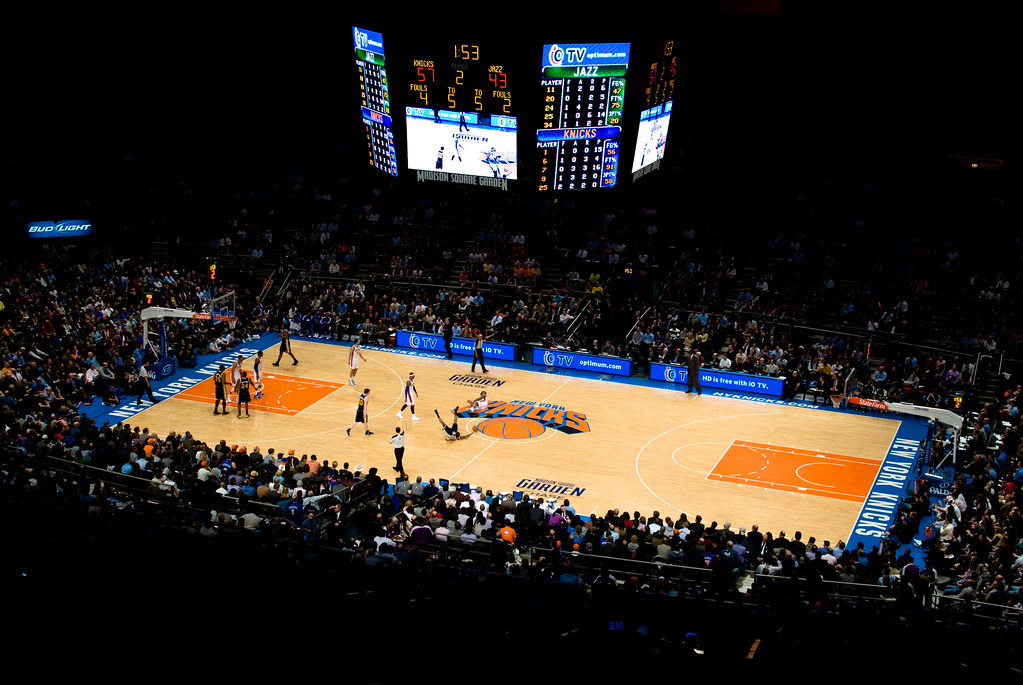
Ignore the scoreboard
The NBA preseason tipped off October 3 and runs 67 games over 14 days, wrapping up October 16. Four days later, the defending champion Knicks host the 76ers to open the 2026-27 season.
Every October, people overreact to preseason records. A team goes 4-0 and becomes a sleeper. A contender goes 0-3 and suddenly has “chemistry concerns.”
My take: the scoreboard is the least useful thing on the screen this month. What the data actually rewards is watching who is on the floor together and how they choose to play. Combinations beat talent, and preseason is when coaches show you their combinations.
What the data says about preseason records
Preseason winning percentage barely predicts the regular season. A 2019 Ringer analysis of every preseason since 2007-08 found a correlation of just 0.30 between preseason and regular-season win percentage. On a scale where 1.0 is a perfect match, that’s weak.
Point differential does a little better, but it’s still a coin flip with a thumb on the scale. A Bleacher Report study found that since 2004, about 66% of teams that were above or below average in preseason point differential stayed on the same side in the regular season. The average team’s differential swung by roughly 5.2 points between the two. Five points per game is the gap between a playoff team and a lottery team.
For context, even real games take a while to mean something. Early in the regular season, a team’s record is generally a weaker guide than its preseason expectations, and it usually takes a few weeks of games before the results start to say much on their own. If the first handful of real games can mislead, a few exhibitions with starters playing limited minutes probably tell us even less.
Why is the record so noisy?
- Starters play limited minutes, then the end of the bench decides the game.
- Coaches experiment on purpose: odd starting groups, three-guard units, rookies in big roles.
- Some teams are fighting for roster spots, others are protecting stars. Effort isn’t comparable across the league.
What actually carries over: style
Preseason can’t tell you how good a team is. It’s very good at telling you how a team plays. The same Ringer analysis found that style stats line up almost perfectly between preseason and the regular season:
| Stat | Preseason-to-regular-season correlation |
|---|---|
| 3-point attempt rate (share of shots that are 3s) | 0.98 |
| Pace | 0.93 |
| Win percentage | 0.30 |
That split makes sense. Who wins an exhibition depends on who’s playing and how hard they care. How a team plays is a coaching decision, and coaches install their system in October whether the game counts or not.
One caveat: raw scoring isn’t style. Teams have historically scored about 2.6 more points per game in the regular season than in the preseason, as rhythm returns and starters play more. Look at the shot mix, not the points.
Read lineups as intent, not results
Here’s the honest part: preseason lineup results are also noise. A five-man unit might share the floor for 15 minutes all month. Its net rating means nothing.
What matters is the lineup choice. When a coach keeps putting the same group together, that’s a signal about the regular-season rotation. The data you want is not “how did they do” but “who keeps showing up next to whom.”
Three things I track:
- Starting groups that repeat. One odd starting five is an experiment. The same five three games in a row is a plan.
- Who closes the half. Starters often return late in the second quarter. That group is usually the closest preview of the real closing lineup.
- Minutes for the 8th through 10th men. Roster battles show up here first. Whoever keeps getting minutes alongside the starters, rather than in garbage time, is winning the job.
This is the “combinations beat talent” idea in practice. A team’s ceiling isn’t the sum of its best players. It’s whether its best pairings fit, and preseason is the first public look at which pairings the coach believes in.
Five 2026 storylines, through that lens
Giannis in Miami. Giannis Antetokounmpo opened the preseason in a Heat uniform against Toronto in Quebec City. Forget the score. Watch who Miami puts around him: how many shooters share the floor with him, and whether the offense runs through his playmaking or around it.
Milwaukee starting over. Bleacher Report ranks the Bucks’ projected starting five (Ryan Rollins, Tyler Herro, Jaime Jaquez Jr., Kyle Kuzma, Myles Turner) last in the league. For a team without an obvious hub, the preseason question is which pairings the staff keeps returning to. That tells you what identity they’re building.
LeBron’s minutes in Philadelphia. LeBron James is 41 and reportedly dealing with chronic arthritis heading into his first Sixers season. His preseason minutes, and which lineups are built to carry the load when he sits, matter more than any box score line. Sixers-Knicks on October 20 will be the first real test.
The Lakers around Luka. Luka Dončić led a quick Lakers surge in a blowout preseason win over Sacramento. The win is meaningless. Which four players were on the floor with him during that run is not.
The 3-point arms race keeps going. Sidy Cissoko says he’s shooting around 1,000 threes a week, and the Pelicans’ Karlo Matkovic is openly hunting long-range shots. Remember the 0.98 correlation: if a player or team is taking more threes in October, expect that to hold. If they’re making more, wait for a bigger sample.
A preseason cheat sheet
| Trust it | Ignore it |
|---|---|
| 3-point attempt rate | Win-loss record |
| Pace | 3-point percentage |
| Starting groups that repeat | Points per game |
| Who closes halves | One-off lineup net ratings |
| Bench minutes alongside starters | Garbage-time box scores |
The preseason ends October 16. When the Knicks raise their banner on October 20, the records reset to 0-0 anyway. The rotations, the shot diets and the pairings coaches settled on in October don’t reset. That’s where the real preview is.


Leave a Reply